
Modern professionals aren’t struggling because they lack ambition or talent — they’re struggling because their time is fragmented.
Between meetings, emails, Slack messages, personal obligations, and constant notifications, the workday gets sliced into tiny pieces. At the end of the day, it often feels like you were “busy” all day… but didn’t actually move the needle.
This is exactly why time blocking has become one of the most effective productivity strategies for busy professionals. And yet, many people try it, fail, and assume it just doesn’t work for them.
The problem usually isn’t the method.
It’s the environment.
Time blocking is far easier — and far more effective — when your workspace supports it. And that’s where coworking spaces quietly change the game.
What Is Time Blocking (and Why It Works)?
Time blocking is a scheduling method where you assign specific blocks of time to specific types of work — instead of reacting to tasks as they pop up.
Rather than keeping an endless to-do list, you proactively decide:
-
When you’ll do focused work
-
When you’ll handle emails and admin
-
When you’ll meet with others
-
When you’ll rest or reset
This approach works because it aligns with how the brain actually functions.
The Science Behind Time Blocking
-
Reduces context switching
-
Lowers decision fatigue
-
Encourages deep work
-
Creates psychological commitment
When you know what you’re working on and when, your brain can relax and focus.
But here’s the catch: time blocking requires boundaries. And that’s exactly what many professionals don’t have when working from home.
Why Time Blocking Is Hard at Home
On paper, working from home sounds perfect for time blocking. You control your schedule. No commute. Total flexibility.
In reality, it’s often the opposite.
Common At-Home Time Blocking Challenges
-
Household interruptions
-
Blurred boundaries between work and life
-
Constant “just one more thing” moments
-
Difficulty starting focused blocks
-
Easy access to distractions
Even with the best planner, time blocks collapse when your environment doesn’t reinforce them.
At home, your brain is surrounded by competing signals:
-
This is where you relax
-
This is where you multitask
-
This is where personal tasks happen
Your calendar may say “deep work,” but your environment says “everything else.”
Why Environment Matters More Than Motivation
Productivity is not just a personal discipline issue — it’s environmental.
Your surroundings constantly send cues to your brain about:
-
What kind of work is expected
-
How focused you should be
-
Whether interruptions are normal
-
How time should flow
Time blocking thrives in environments where:
-
Work has a clear start and end
-
Focus is socially reinforced
-
Distractions are minimized
-
Structure exists without rigidity
This is where coworking spaces naturally support time blocking — without requiring more willpower.
How Coworking Spaces Reinforce Time Blocks
1. Physical Separation Creates Mental Boundaries
When you leave your home and enter a coworking space, your brain switches modes.
This physical transition:
-
Signals “work time”
-
Reduces internal negotiation
-
Makes it easier to honor scheduled blocks
Time blocks become commitments instead of suggestions.
Instead of asking, “Should I really start this now?”
Your brain assumes, “This is what I’m here to do.”
2. Built-In Structure Without Micromanagement
Coworking spaces offer structure without the pressure of a traditional office.
You still control:
-
Your schedule
-
Your projects
-
Your priorities
But the environment provides:
-
Clear work rhythms
-
Social accountability
-
Fewer interruptions
This balance makes it easier to follow through on time blocks — especially for deep work sessions.
3. Social Accountability (Without Distraction)
One of the most powerful productivity drivers is ambient accountability.
When you’re surrounded by others working:
-
You’re less likely to procrastinate
-
You’re more likely to stay in a task
-
You naturally respect your scheduled focus time
You don’t have to talk to anyone. You don’t have to collaborate. The simple presence of others working creates subtle pressure to stay on task.
This is why so many professionals say:
“I get more done even when I don’t interact with anyone.”
That’s social psychology at work.
4. Fewer Micro-Interruptions
Time blocking depends on protecting focus blocks — and interruptions are the fastest way to break them.
At home, interruptions are often:
-
Unpredictable
-
Emotional (family, pets, chores)
-
Frequent but “small”
In coworking spaces:
-
Interruptions are fewer
-
Noise is more predictable
-
Boundaries are respected
This makes it far easier to protect deep work blocks and keep momentum.
Time Blocking Becomes Easier When Tools Are Ready
Coworking spaces reduce friction — and friction is the enemy of time blocking.
When you arrive at a workspace designed for productivity:
-
Your desk is ready
-
Your chair is comfortable
-
Wi-Fi is reliable
-
Meeting rooms are available
-
Supplies are accessible
You’re not making decisions before you even begin. You sit down and execute.
This preserves cognitive energy for the work that actually matters.
Using Time Blocking Effectively in a Coworking Space
Coworking spaces don’t magically fix your schedule — but they amplify good systems.
Here’s how busy professionals can combine time blocking with coworking for maximum impact.
Step 1: Block Your Day by Energy, Not Just Tasks
Instead of scheduling tasks randomly, group them by mental energy level.
Example Time Blocks:
-
Morning: Deep work / strategy
-
Late morning: Meetings or collaboration
-
Early afternoon: Admin, email, follow-ups
-
Late afternoon: Creative or planning work
Coworking environments are especially effective for:
-
Deep focus blocks
-
Structured admin sessions
-
Scheduled collaboration
Step 2: Match Space to Task
Many coworking spaces offer different zones:
-
Quiet areas
-
Open desks
-
Meeting rooms
-
Lounge or creative spaces
Use your environment intentionally:
-
Deep work → quiet zones
-
Meetings → conference rooms
-
Creative work → open or relaxed areas
This alignment reinforces your time blocks instead of fighting them.
Step 3: Use Arrival and Departure as Anchors
One of the hidden benefits of coworking is the natural start and stop point.
Arriving at the space = beginning your workday
Leaving the space = ending your workday
This makes it easier to:
-
Stick to planned time blocks
-
Avoid overworking
-
Protect personal time
Time blocking becomes sustainable — not exhausting.
Why Busy Professionals Benefit Most
Time blocking works best for people whose days are already full.
Coworking spaces are especially valuable for:
-
Entrepreneurs and founders
-
Consultants and freelancers
-
Remote employees
-
Executives and managers
-
Creatives juggling multiple roles
When your time is limited, structure matters more than flexibility.
Coworking provides just enough structure to make time blocking realistic — even on chaotic weeks.
The Hidden Benefit: Reduced Mental Load
When time blocking works, it does more than improve productivity.
It:
-
Reduces stress
-
Increases confidence
-
Improves work quality
-
Creates mental clarity
Coworking spaces amplify this effect by removing background noise — both literal and mental.
Instead of constantly deciding what to do next, you execute what you already decided.
Common Misconception: “Coworking Will Distract Me”
Many professionals worry coworking will interrupt focus.
In practice, the opposite is often true.
Coworking spaces are designed for work — not socializing. Most people are deeply focused, respectful, and intentional with their time.
Distraction usually comes from:
-
Unstructured environments
-
Emotional interruptions
-
Lack of boundaries
Not from being around other professionals doing their jobs.
Time Blocking Is Easier When Your Environment Supports You
Time blocking isn’t about controlling every minute. It’s about reducing chaos and protecting focus.
Coworking spaces make this easier by:
-
Creating physical boundaries
-
Providing social accountability
-
Reducing friction
-
Supporting consistent routines
You don’t need more discipline.
You need fewer obstacles.
Time Blocking Is the Key
Time blocking is one of the most effective productivity tools available — but it’s only as strong as the environment supporting it.
For busy professionals, coworking spaces bridge the gap between flexibility and structure. They make it easier to honor your calendar, protect deep work, and actually finish what you plan.
If you’ve tried time blocking and felt like it “didn’t work,” the problem may not be your schedule.
It may be where you’re trying to follow it.
Sometimes, changing where you work changes how you work — and everything else falls into place.
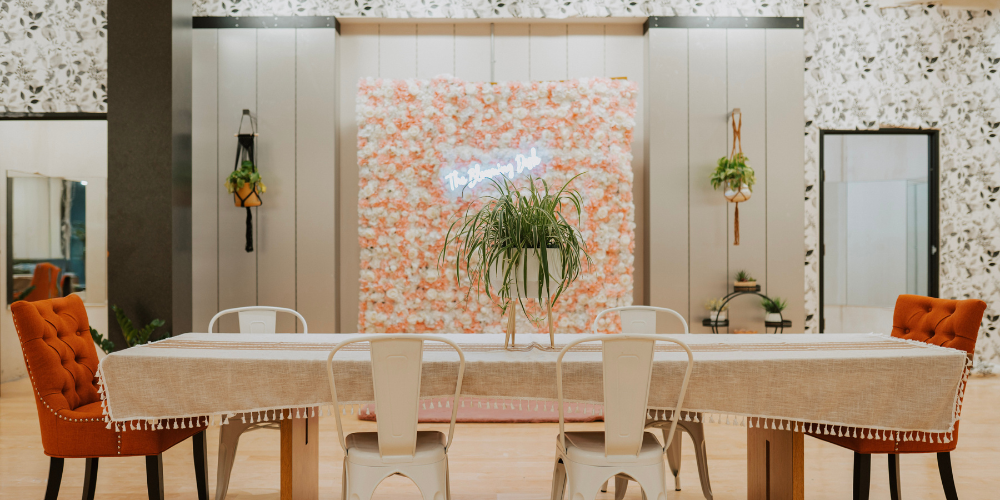
Time Block at The Blooming Desk
Time blocking is one of the most effective productivity strategies for busy professionals—but it only works when your environment supports it. Blocking off two hours for deep work doesn’t mean much if you’re surrounded by interruptions, multitasking temptations, or the mental load of home responsibilities. This is where coworking spaces become a powerful tool, not just a nice-to-have.
At The Blooming Desk, located inside Salem Center Mall, time blocking becomes easier because the space itself creates natural boundaries. When you arrive, your brain switches into “work mode.” When you leave, work stays behind. That physical separation is critical for making time blocks realistic—and sustainable.
Coworking spaces support time blocking in three key ways:
1. Clear Start-and-Stop Cues
Unlike working from home, where work bleeds into personal time, coworking provides a defined beginning and end to each block. Whether you’re coming in for a focused morning session or a short afternoon sprint, the act of entering a professional workspace reinforces intentional scheduling.
2. Fewer Context Switches
At The Blooming Desk, distractions like laundry, kids’ schedules, and household noise are replaced with a calm, purpose-driven atmosphere. This allows time blocks to be spent actually working—not resetting your focus every five minutes.
3. Built-In Accountability
There’s a subtle productivity boost that comes from being surrounded by others who are also focused. This social accountability makes it easier to honor your time blocks and resist the urge to multitask or procrastinate.
For professionals juggling meetings, creative work, and personal responsibilities, coworking transforms time blocking from a theoretical productivity hack into a practical daily routine. Spaces like The Blooming Desk don’t just give you a desk—they give structure to your schedule, clarity to your workday, and momentum to your goals.
When your time is limited, your environment matters. And choosing a space that supports focused work can be the difference between constantly running behind and finally working with intention.